Designing disaster relief housing
2005 Aceh, Indonesia
2005 Aceh, Indonesia
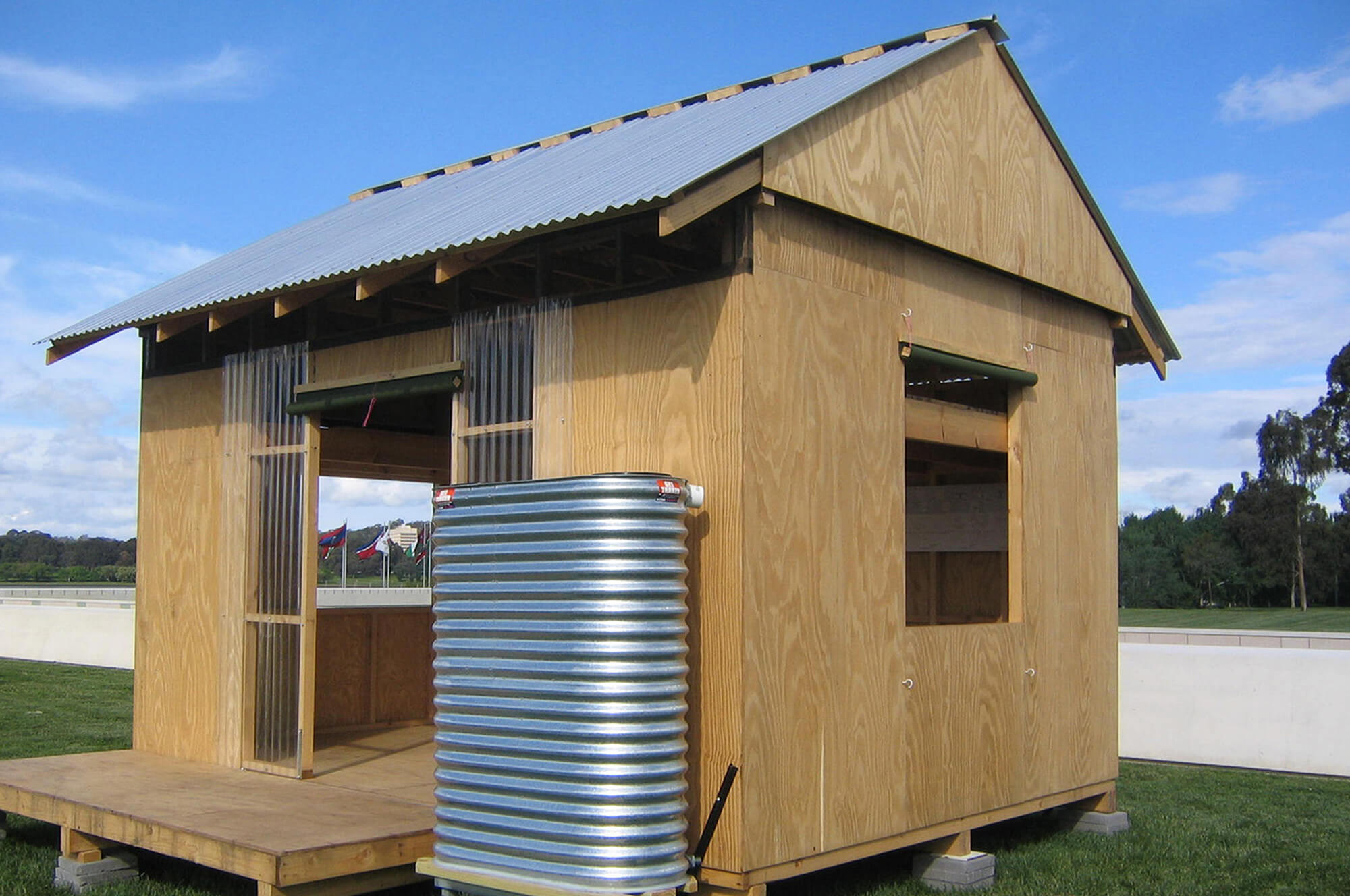
Our chosen brief was to develop a temporary dwelling to address the then current housing crisis in Aceh Province, Indonesia, following the 2004 Tsunami.
Rebuilding Aceh Amidst Fragile Forests
Due to complete devastation of housing and infrastructure in Aceh, permanent housing for many of the 500,000 displaced people would not be available for three to five years after the disaster. The sheer volume of building materials required for rebuilding posed an environmental disaster if sourced locally. Illegal logging was – and likely still is – stripping Aceh of one of Indonesia’s last relatively intact tropical forests.
Discover more


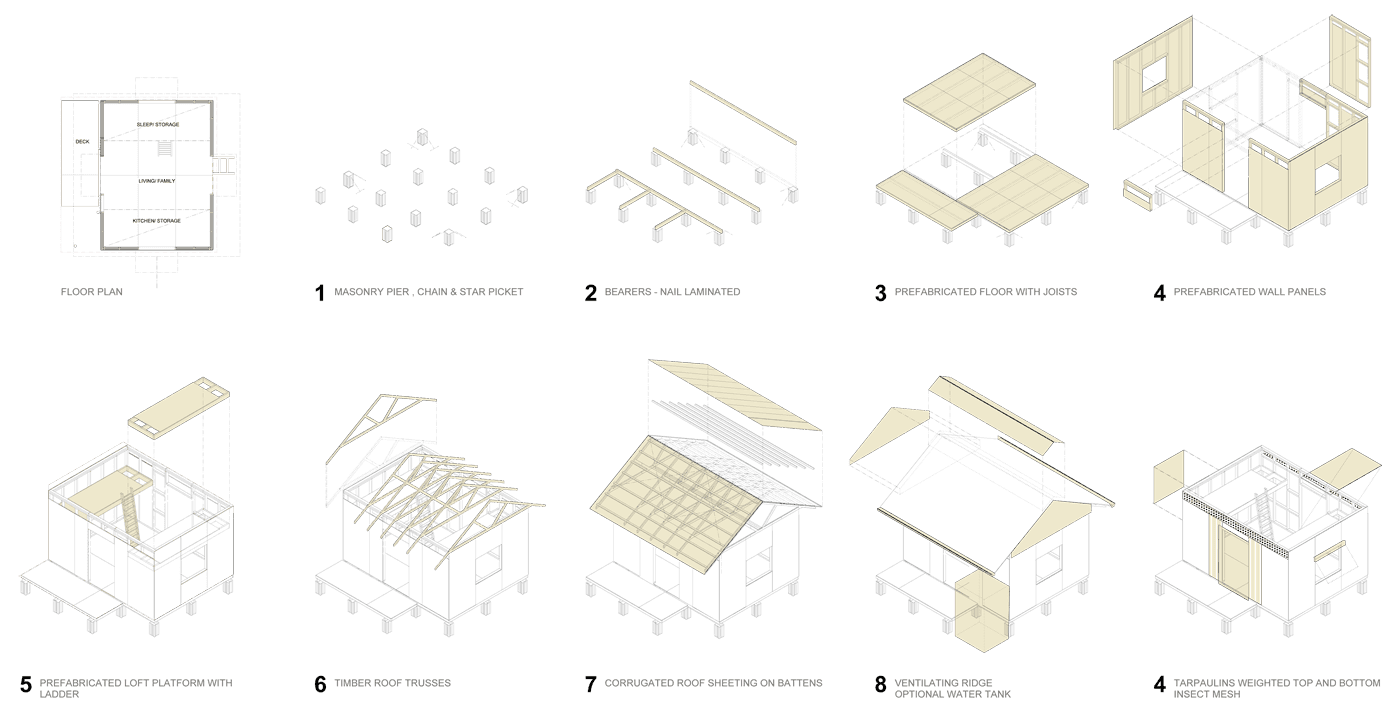
“Our design utilised pre-fabricated components made from Australian-grown plantation timbers to provide temporary dwellings that could later be either demolished and recycled, or modified to suit more permanent needs.”
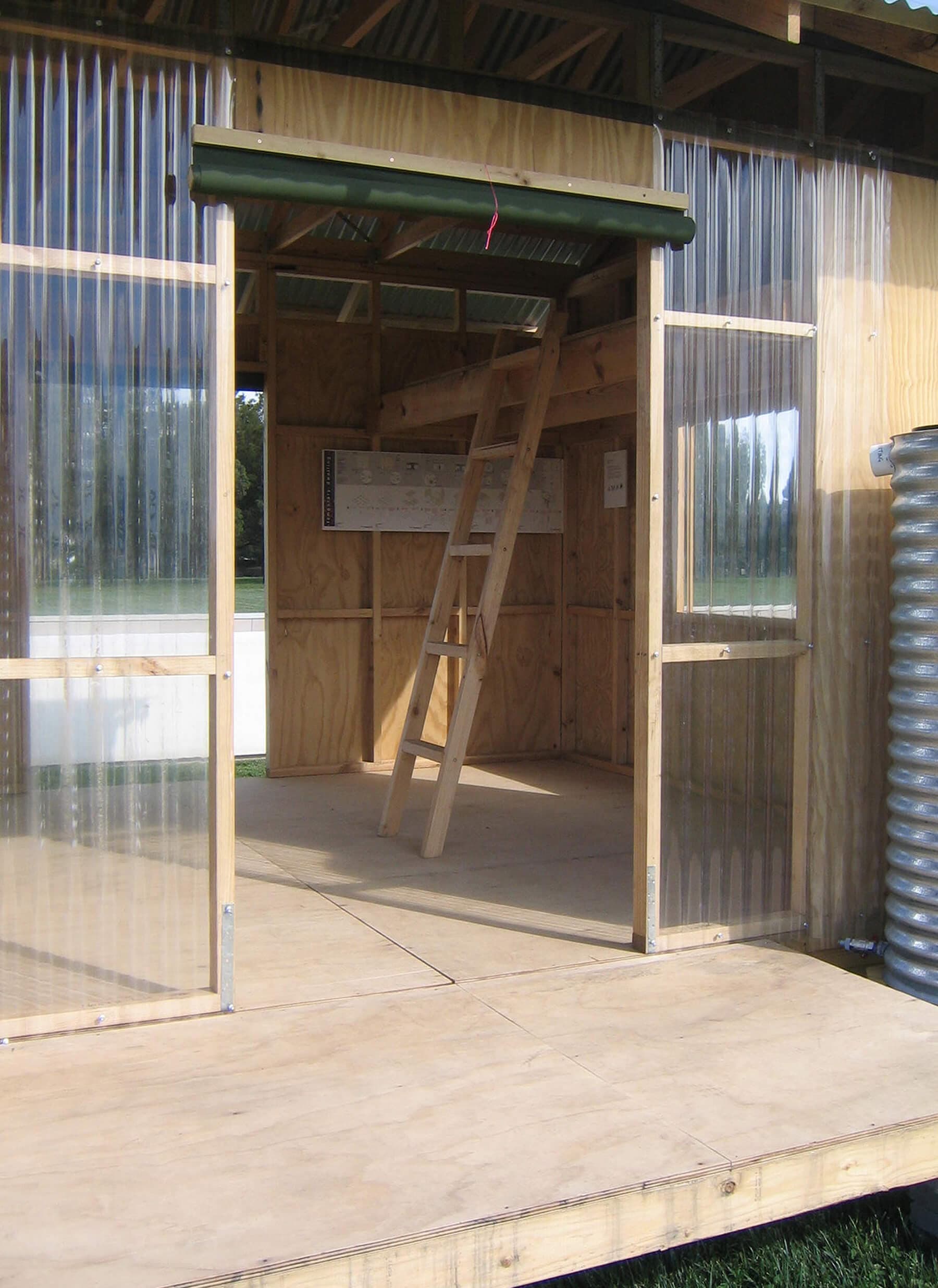
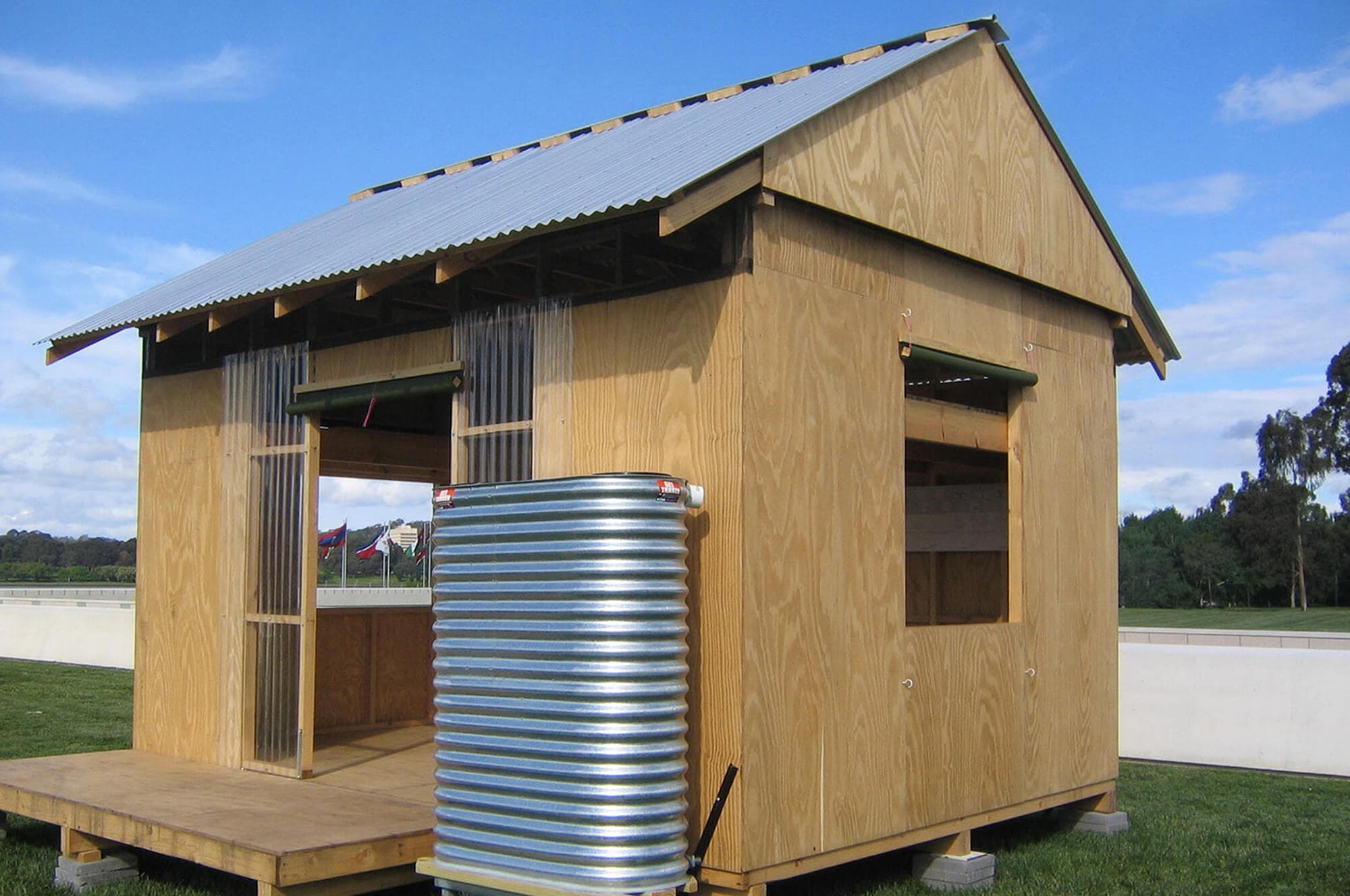
The Disaster Relief Housing was a very simple, lightweight, low cost, shelter suited to a hot humid climate. We felt that the appearance should not be alien to the vernacular architecture.
People in crisis need stability and familiarity, not cutting edge design produced by an alien culture/designer. It was a very interesting and educative process. Having been selected to exhibit our design in Canberra, we sought out aid organisations who might want to utilise it. In our earnest effort to design a culturally and climatically appropriate dwelling, we had not appreciated one very important fact.
Habitat For Humanity advised us that whilst traditional house construction in Aceh Province, Indonesia has generally been of lightweight materials (timber, bamboo, thatch), the current cultural preference is for solid, masonry construction – something our design certainly was not, and could never really be. This was a salutary lesson for us.
| Project info | Details |
|---|---|
| Team | Sam Crawford, Miles Heine, Cressida Beale |
| Builder | Master Builders Association Group Training (ACT) |
| Consultants | Structural Engineer: O’Hearn Consulting Quantity Surveyor: Coutts Consulting |
| Sponsors | Bluescope Steel Bluescope Water Gale Pacific |
| Acknowledgements | Heather Mclean, Opportunity International (Australia) Chris Papworth, Habitat for Humanity (Australia) Tania Cass, Oxfam (Australia) |
| Completion | 2005 |

What we do
We design thoughtful, context-aware housing that balances privacy, connection and quality of life. From compact inner-city developments to larger apartment projects, our work responds to people, place and purpose. Careful planning, clear circulation and enduring material choices help create homes that are generous, efficient and a pleasure to live in.
Discover more
Activating a prominent site through texture. The Sanctuary apartments add texture, greenery and life to a currently under-utilised…

Multi-residential concept highlights context, community, activation and diversity. We were invited to participate in a competition to design…