Dorrigo Campsite & Accommodation
Dorrigo National Park, NSW
Dorrigo National Park, NSW
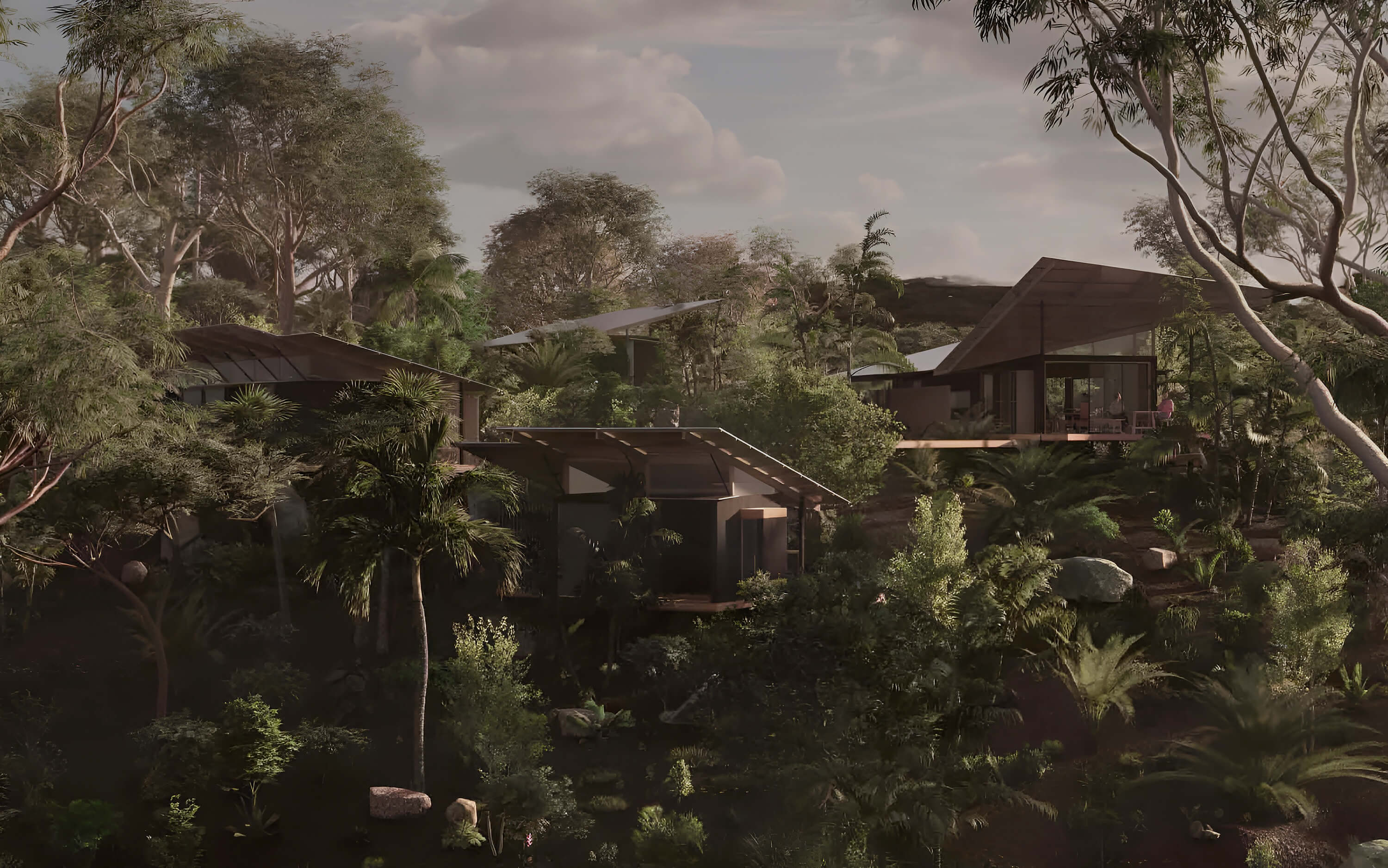
A cluster of modular prefab hiker huts nestles in the rainforest landscape. Tourism infrastructure protects and educates in this remote, constrained and precious site.
Architecture as guest in the rainforest
The collaboration with Derive Design and Bangawarra for an invited shortlist design competition by National Parks & Wildlife Service saw a Country-led approach that sees humans as one element of a much wider, deeply interconnected system.
Discover more


“The off-grid hiker huts are in three diverse locations along a four day hike route in the Dorrigo World Heritage-Listed Gondwana Rainforests. The design connects to the Country they are located in – by minimising impacts to the precious sites, seeking inspiration from the native flora and fauna of the unique landscape, and providing educational opportunities for the hikers to learn from Country.”
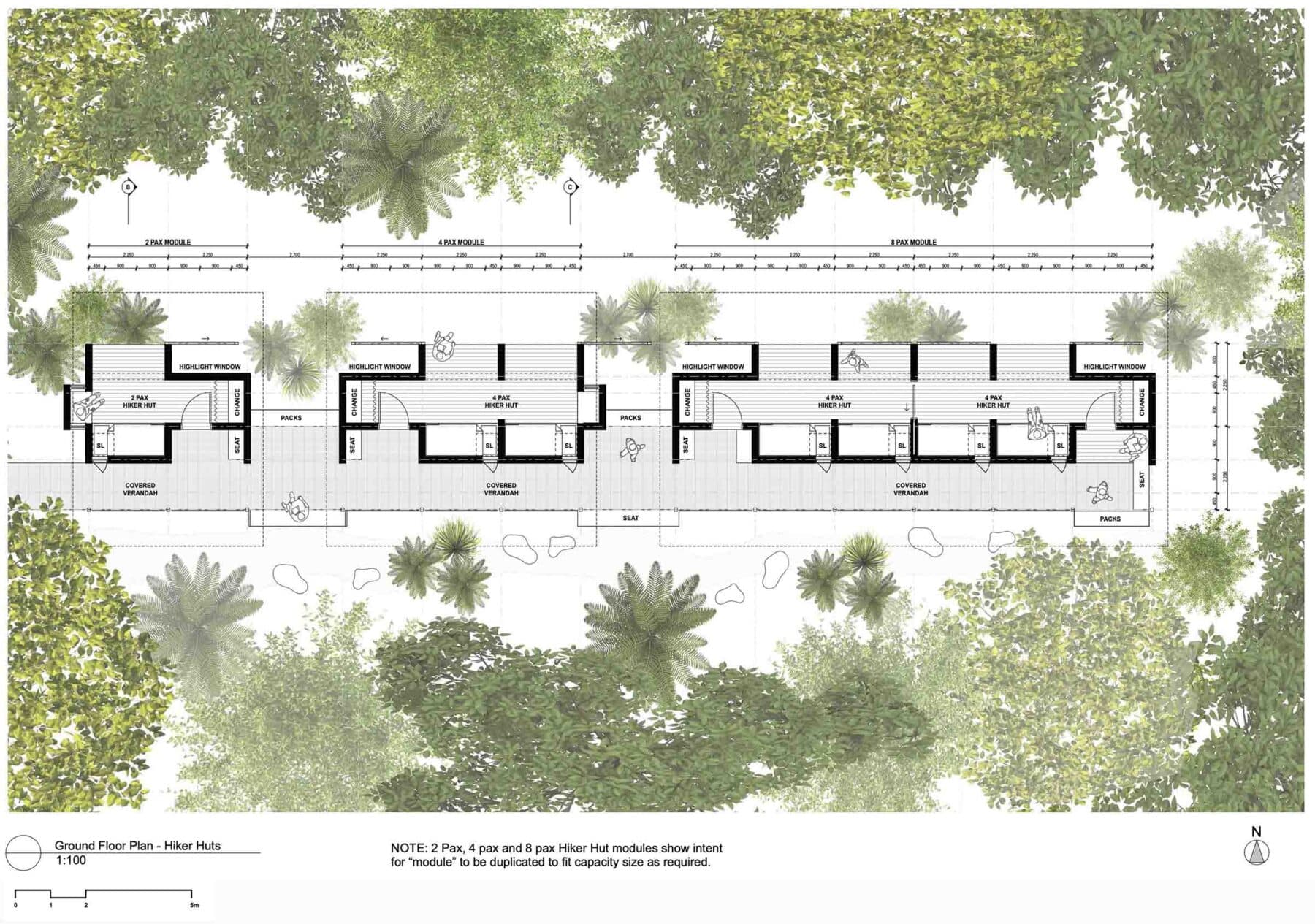
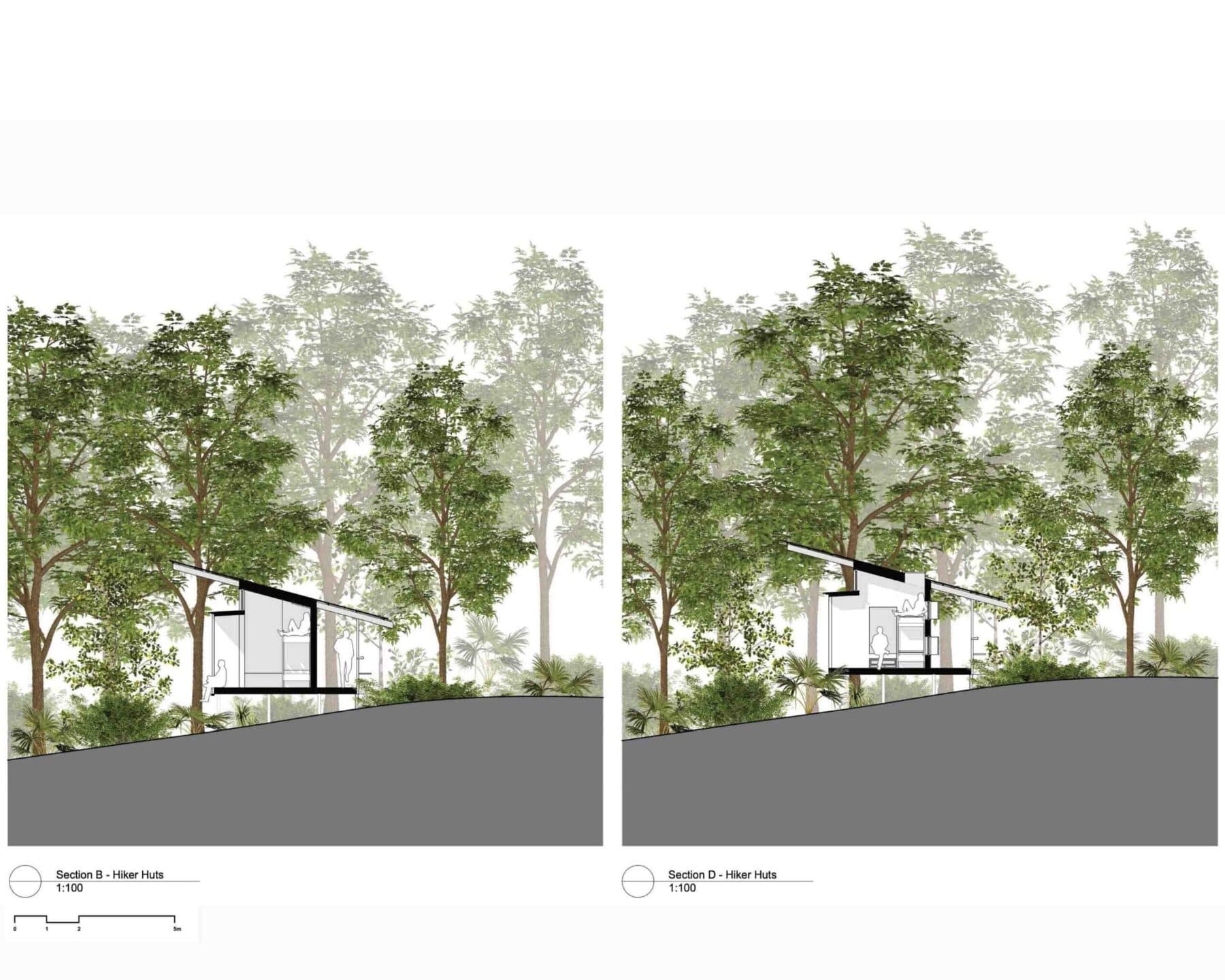
The modular sleeping huts allow for various bed configurations, the size and layout determined by different site terrains. They feature an entry threshold with shelves for backpacks and equipment drying.
Various apertures – skylights, clerestory windows, flaps – allow hikers look out at views to the forest floor, under-storey, canopy and night sky, connecting the sleeping quarters to the landscape beyond.
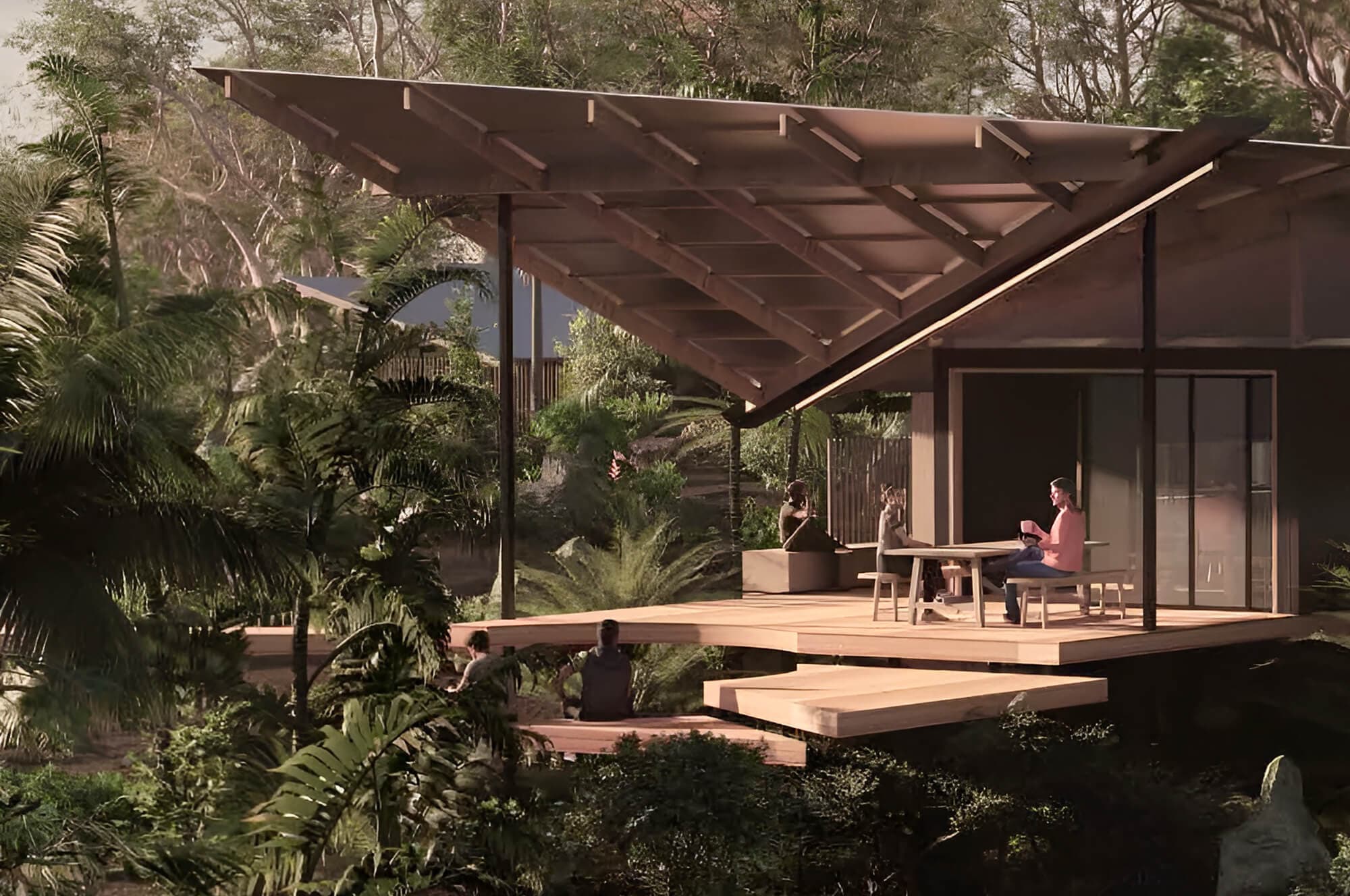
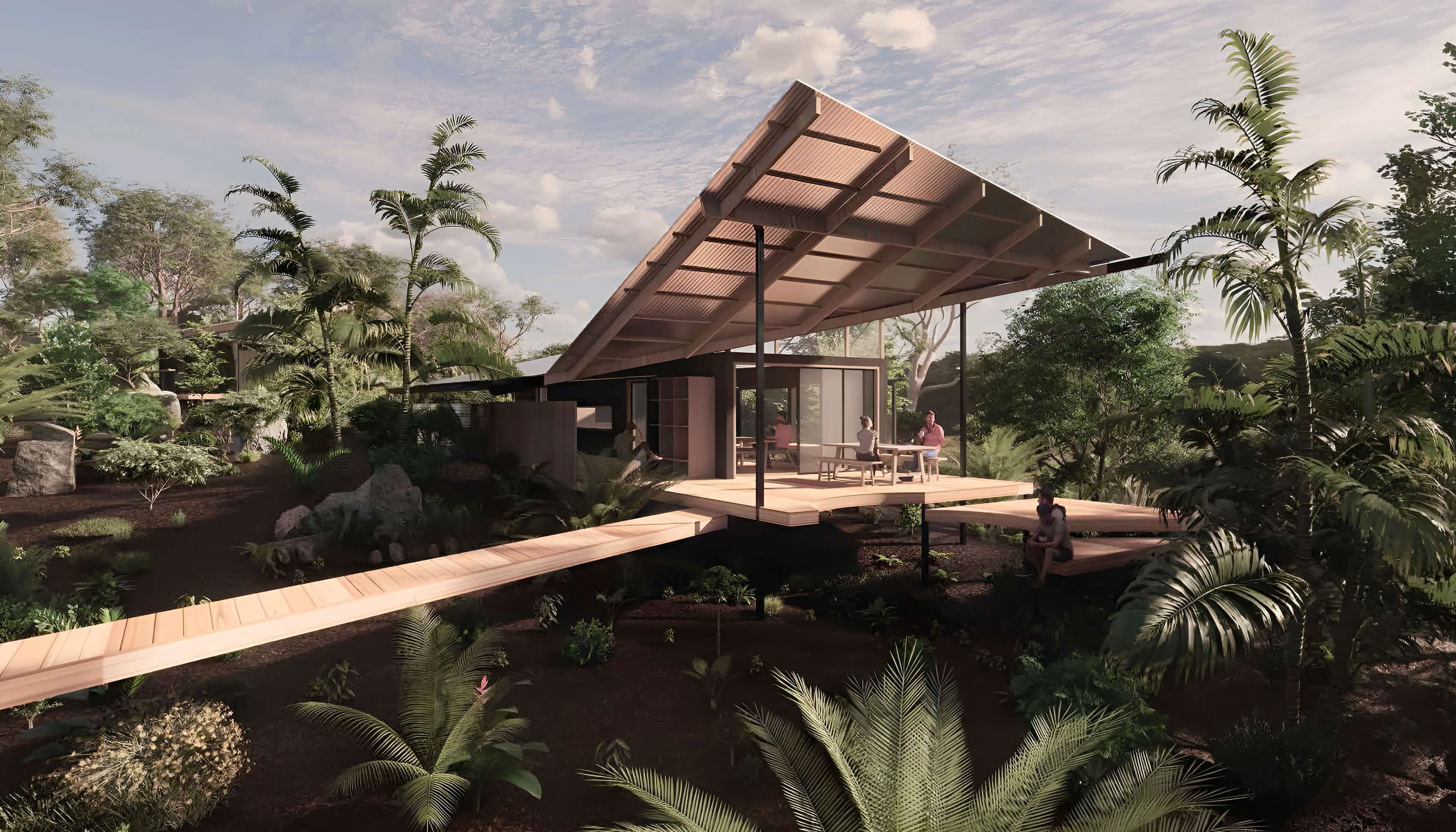
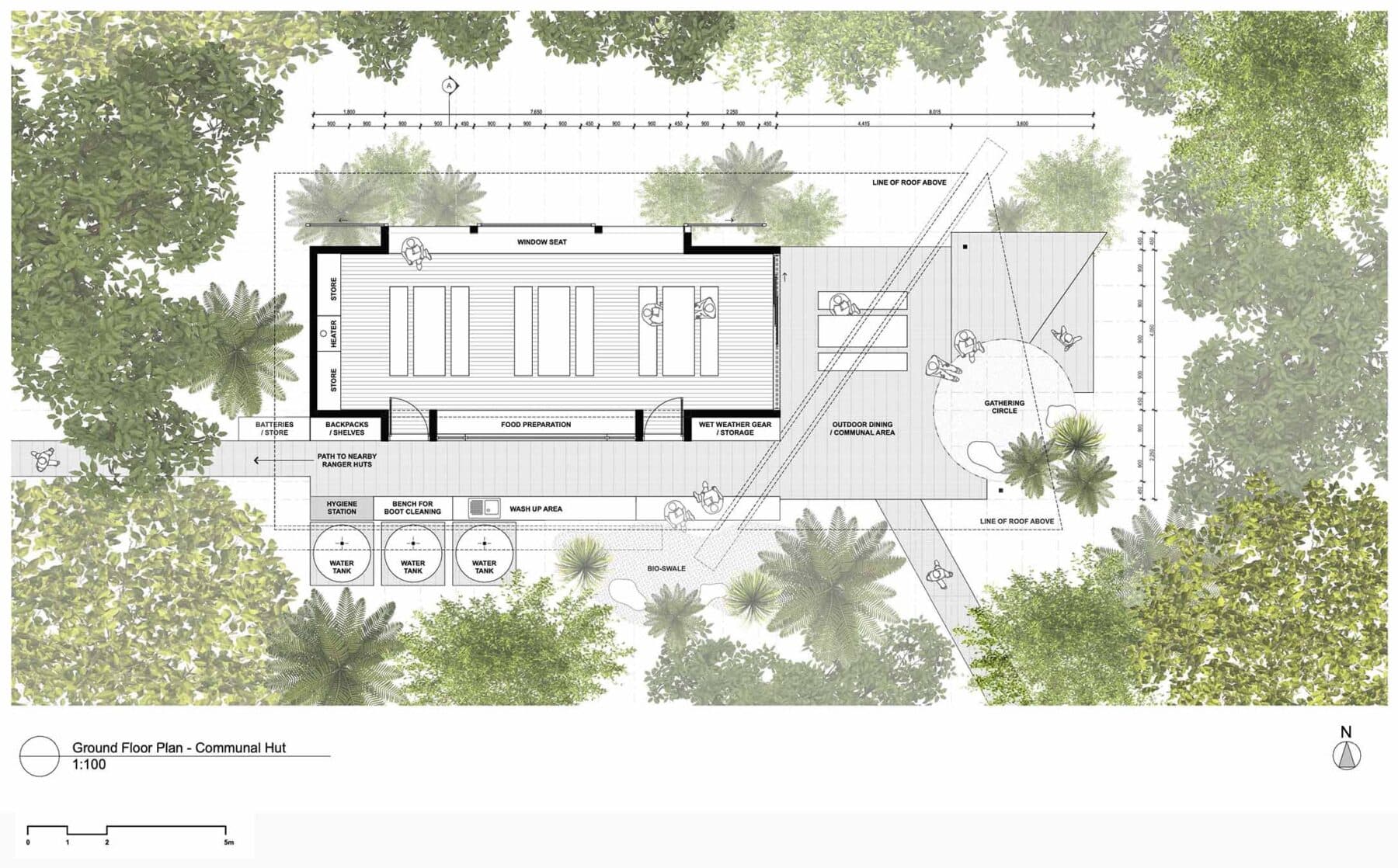
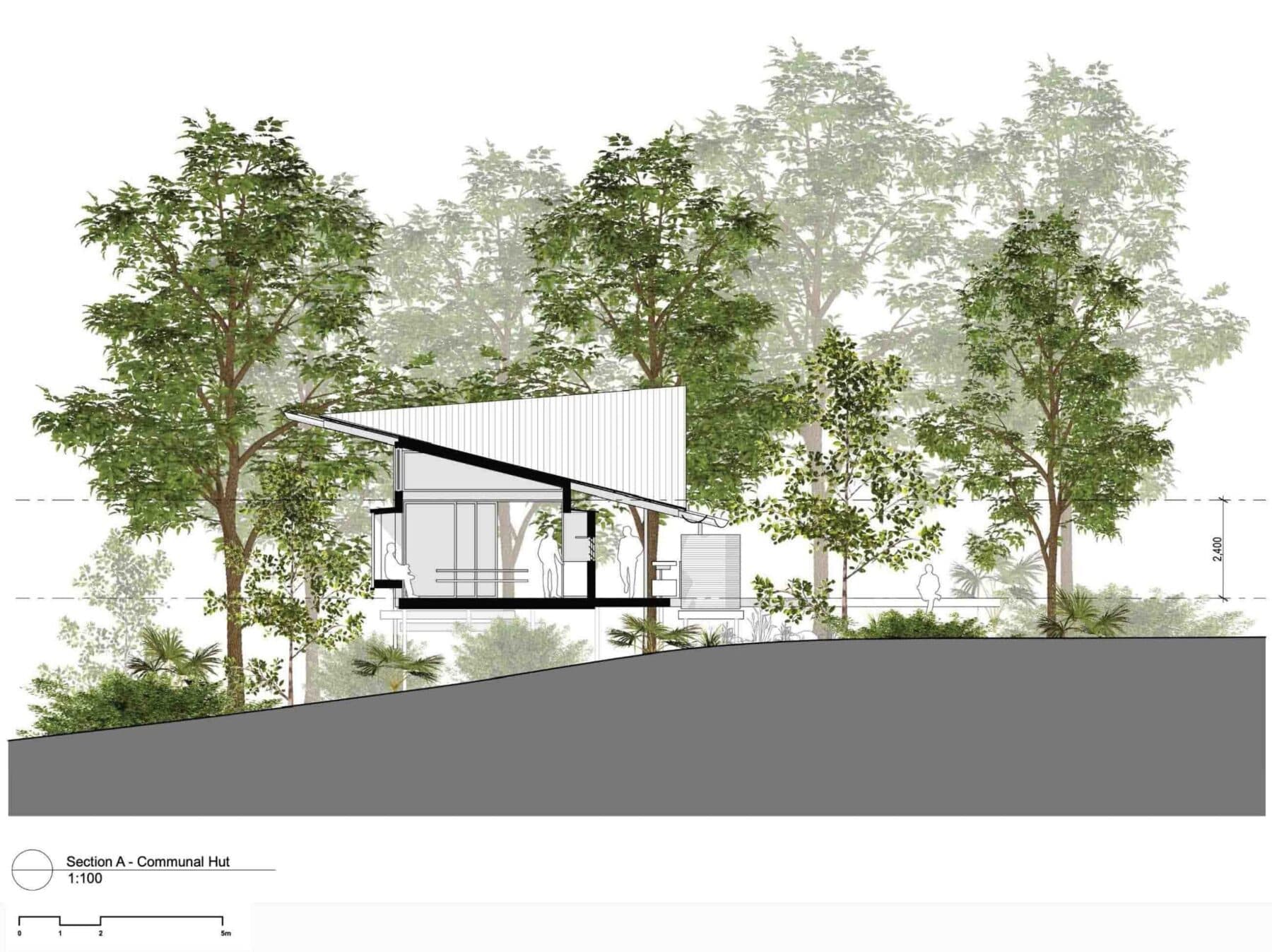
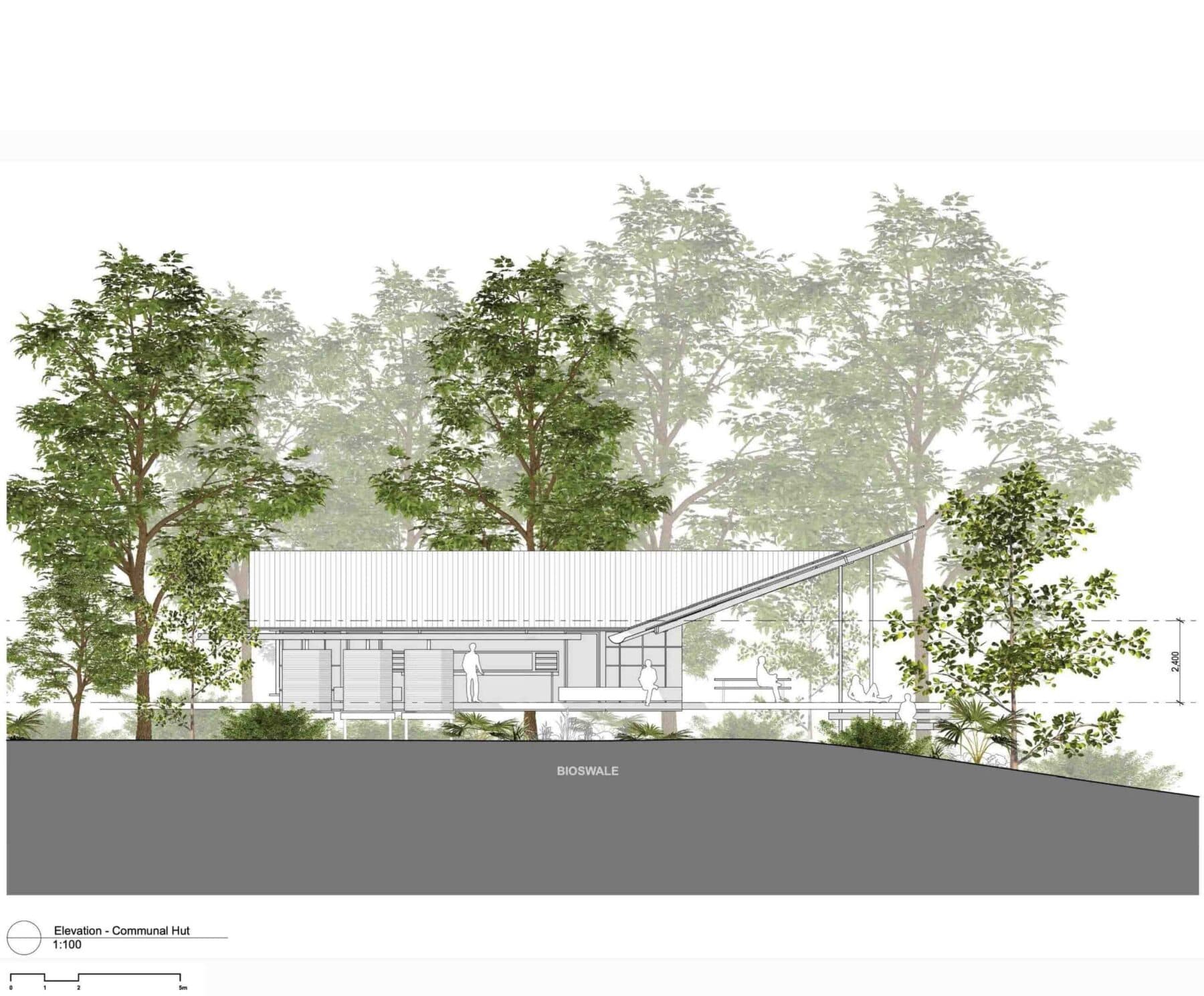
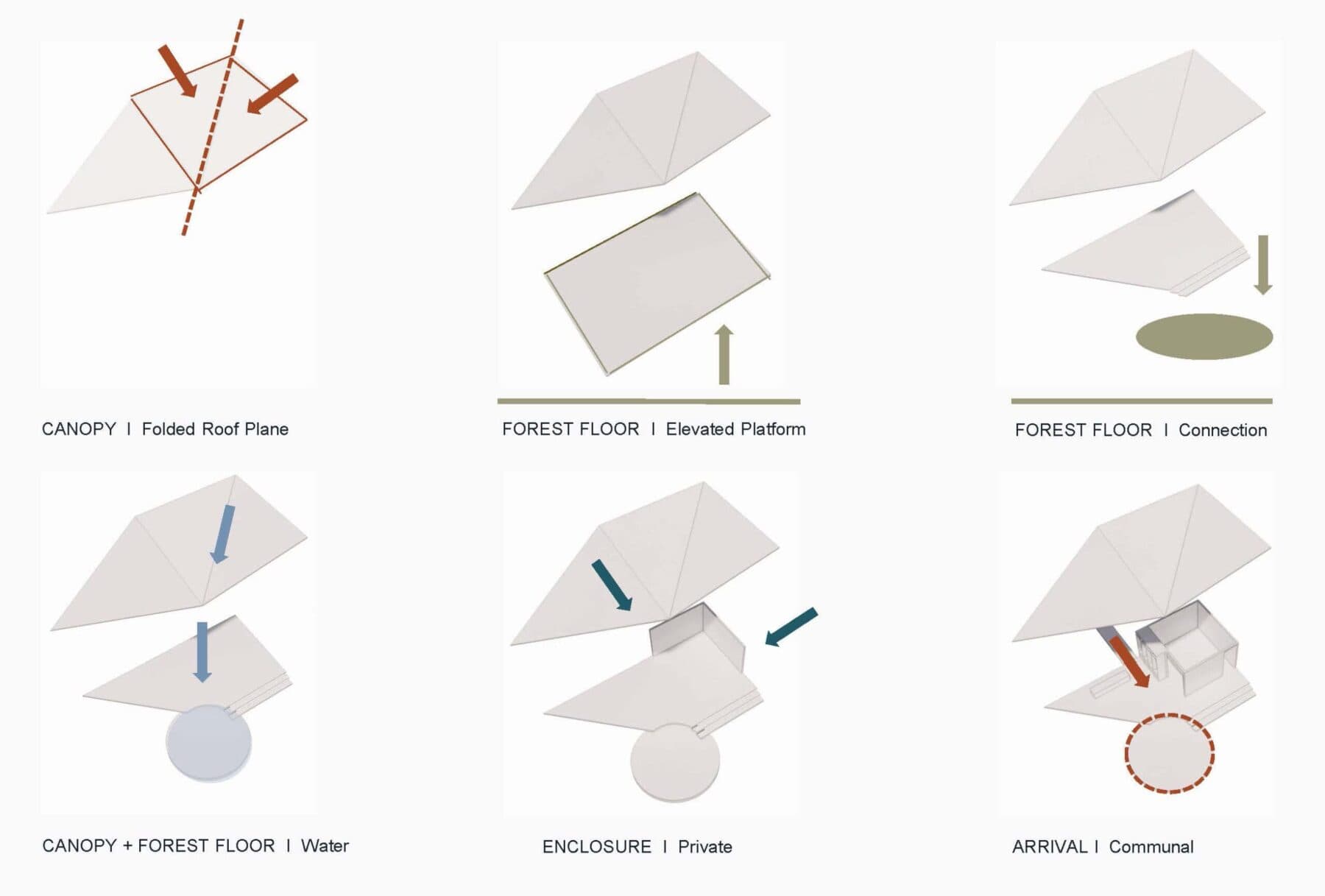
A communal structure houses dining, cooking and relaxing zones and features a bio-swale and gathering circle under the folded canopy, tiered timber observation platforms, and large sliding doors and fly-screened enclosure for engagement with the landscape. The steep valley-shaped roof takes its cues from leaf structure, redirecting water to rainwater tanks and bio-swales.
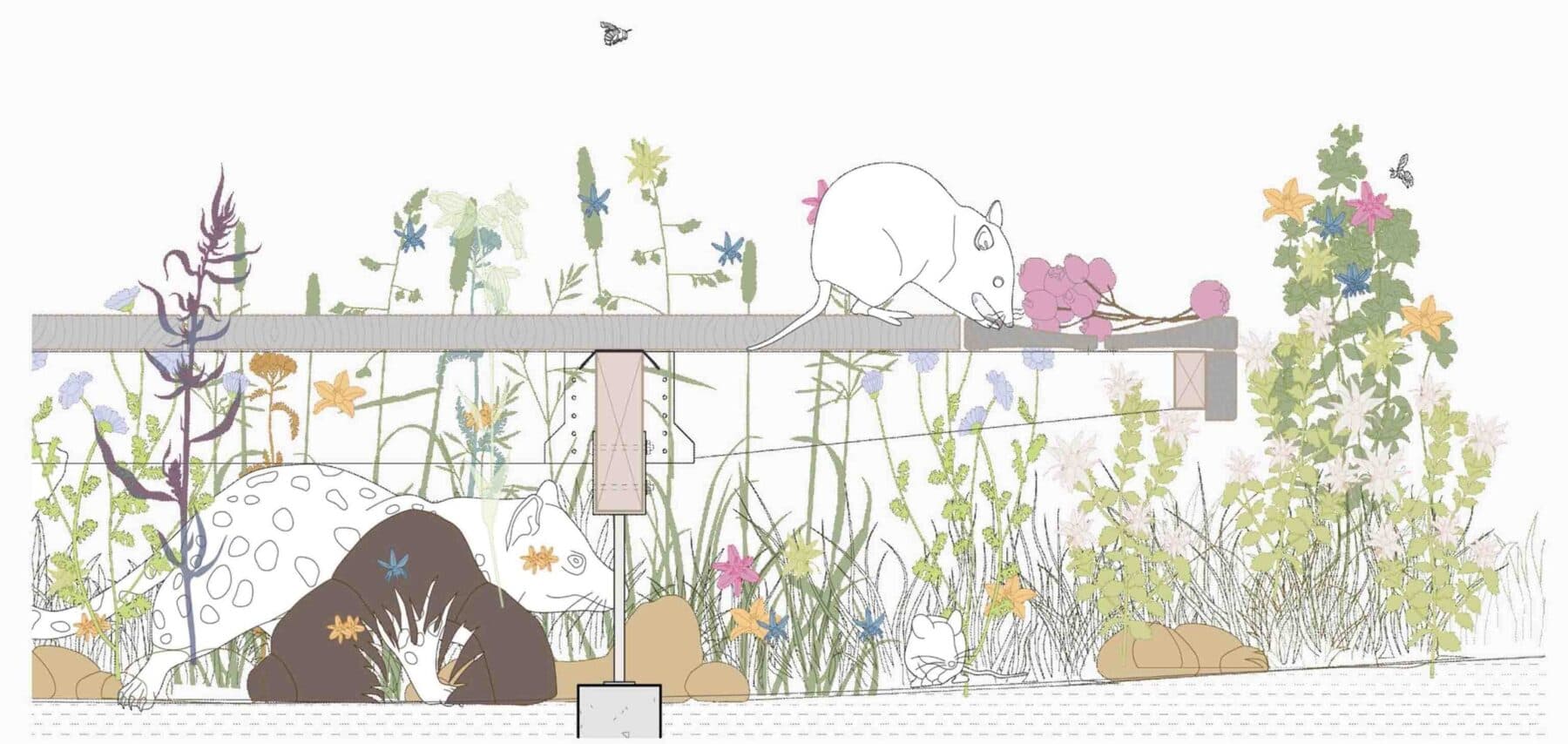
Increased surface areas encourage habitat for endangered animals, with educational signage enhancing the hiker experience.
The palette sees rich natural colours and textures inspired by the park’s volcanic history and dense rainforest. The remote site required robust prefab and lightweight materials – steel, hardwood timbers, glazing and FRP platforms – to provide protection from the elements, reduce maintenance and increase longevity.
| Project info | Details |
|---|---|
| Team | Sam Crawford Architects: Sam Crawford, Benjamin Chan, Jarrod Ruchalski Derive Design: Jason Elsley, Cherry Parsons |
| Consultants | Structural, Civil, Hydraulic: Northrop Connecting with Country: Bangawarra |
| Published | Indesignlive |
What we do
We design public buildings and civic spaces that foster community connection, cultural expression and a sense of belonging. From libraries to public domain projects, our work is shaped by purpose, context and collaboration. These are places designed for people, built to enrich the cities and neighbourhoods they sit within.
Discover more
The Bara Boardwalk connects the Bara Bridge to the extensive cycling and pedestrian network of Centennial Park. The…

A new amenities block references the serrated leaves of endangered banksia located nearby. The zigzagging walls of a…