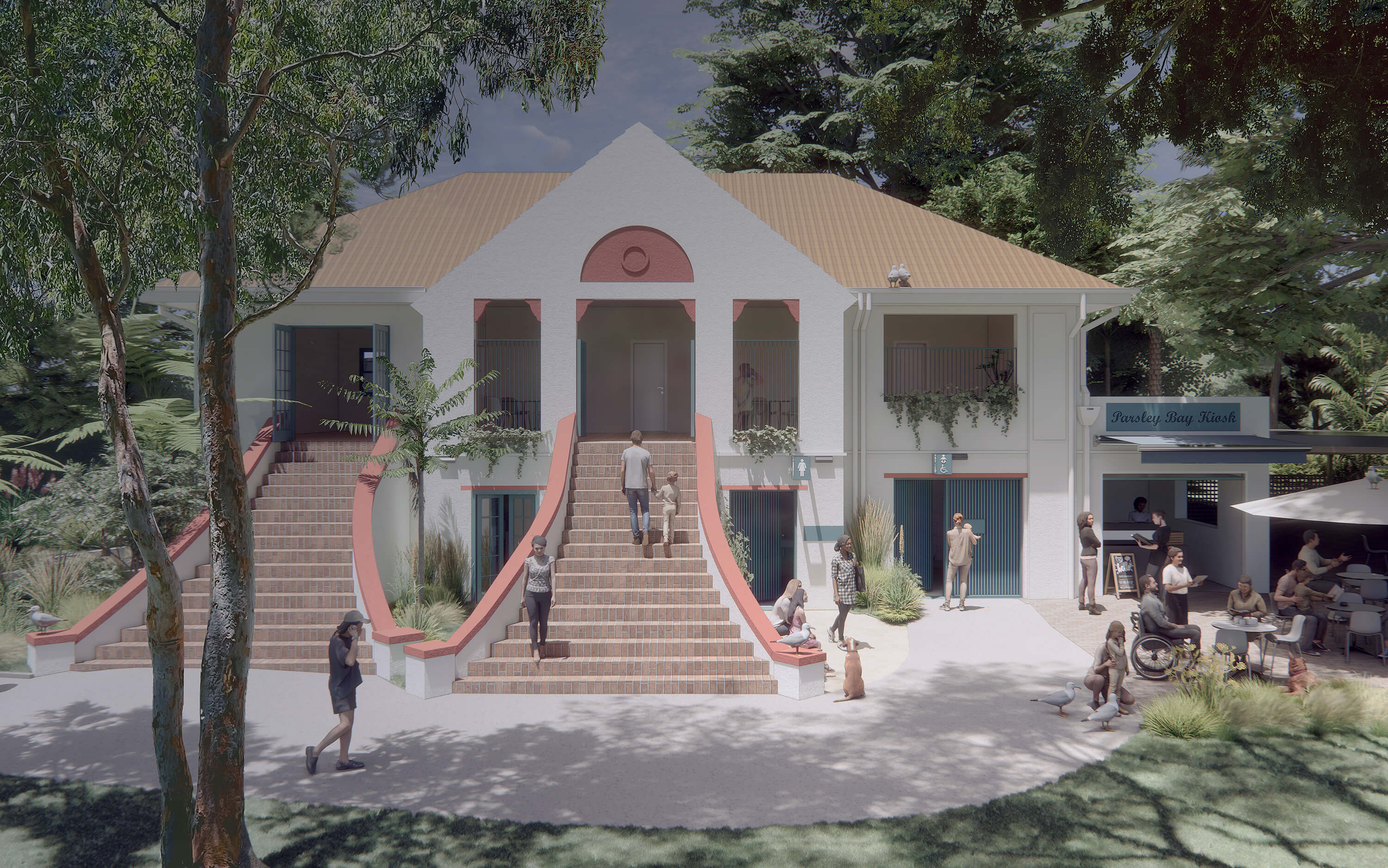
Parsley Bay Kiosk
Ongoing / Parsley Bay, NSW
Ongoing / Parsley Bay, NSW
Converting the unused basement of a 1930s caretakers cottage into bathrooms and change rooms provides much needed amenities at one of Sydney’s popular harbour beach spots. Locating safe, durable and stylish toilets inside the cottage minimises the impact on the precious park and preserves the heritage building – a sustainable solution for future generations.

From Disuse to Design
Existing and outdated amenities had to be removed to facilitate an upgrade to stormwater, and new premises needed to be found. An unused garage and basement in the caretakers cottage was the perfect fit.
Discover more

“The new amenities are designed entirely within the footprint of the existing building, retaining and restoring the existing kiosk and caretaker’s residence, and avoiding potential disturbance of significant Aboriginal artefacts.”
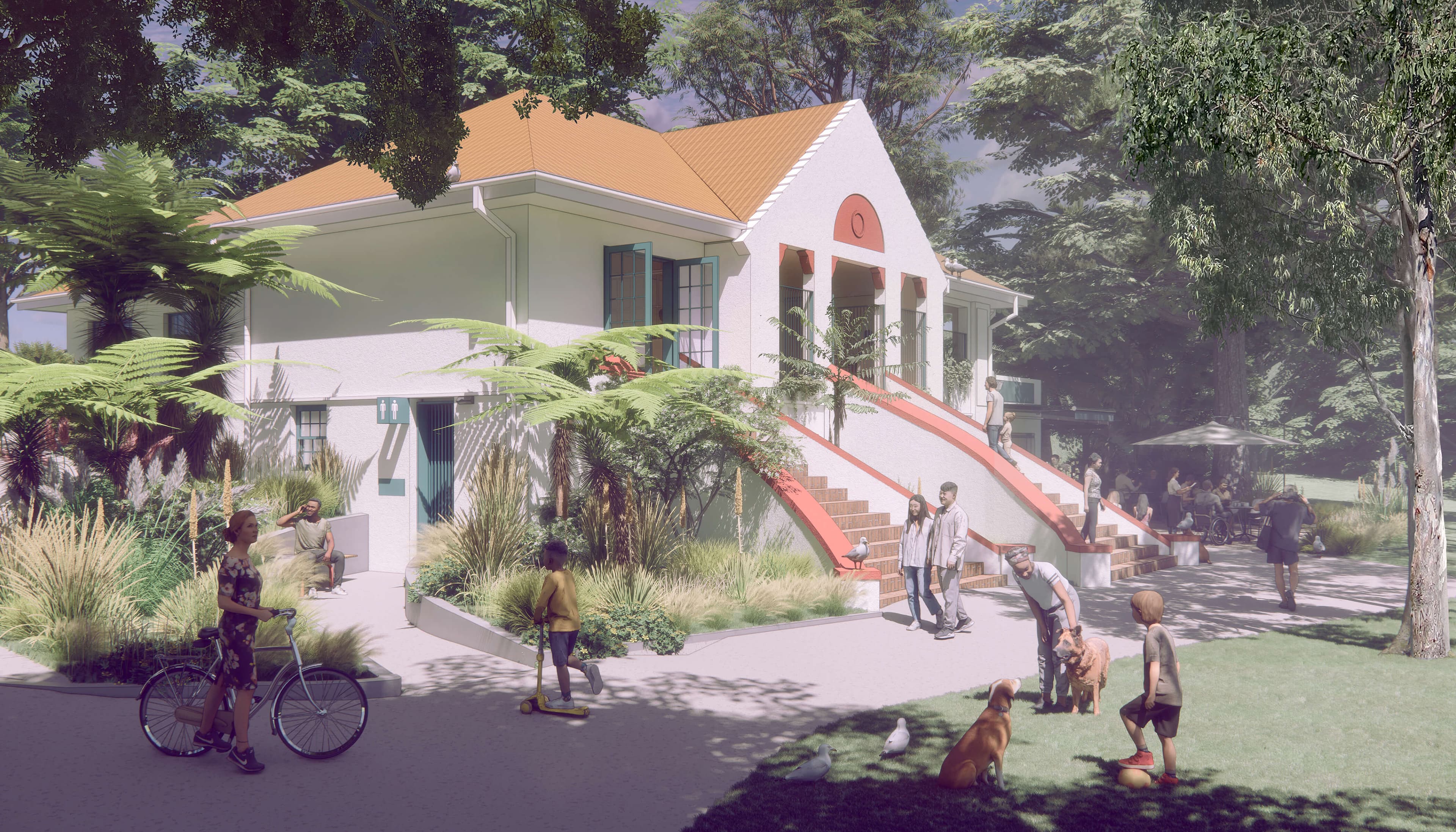
The design maintains and restores the existing building’s rich history, avoids visual impact on neighbours, is close to the beach, kiosk and playground, has direct connection to services within the building and has a minimal impact on the surrounding park.
The internal colour scheme of manor red and turquoise reflects the existing cottage colours and echoes the beach setting. The playful interior features a staggered mix of matt and gloss wall tiles with coloured grout creating a ripple water effect, plus terrazzo partitions with shell-shaped pieces of marble. New metal gates and screens maximise natural airflow and light into the facilities addressing its basement location. Concealed cisterns give a domestic feel.
Safety, privacy and accessibility were key concerns. In addition to providing accessible toilets and change rooms, the design is durable, low maintenance, vandal resistant and makes people feel safe and welcome. Accessible entry points and paths, new landscaping, timber screening and seats, new signage, and relocation of existing rainwater tanks complete the picture.
A new pumping station will replace the previous amenities and improve harbour and coastal water quality, protecting the health of the community and marine ecology. Parsley Bay Reserve has a playground, swimming enclosure and connection to a bushland walk. An original tea house dates from 1910 and was rebuilt as the caretaker’s residence in 1930.
A great sustainable and heritage outcome.
| Project info | Details |
|---|---|
| Team | Sam Crawford, Sofia Nay, Louisa Gee, Allen Huang, Héléna Short, Gabrielle Pelletier |
| Builder | Gartner Rose |
| Consultants | Civil Engineer: ACOR Structural & Electrical Engineer: Stantec Geotech Engineer: Green Geotechnics Landscape Architect: TARN PCA: Anthony Protas Consulting Town Planner: ASquare Planning Section J Consultant: JN Surveyor: Surv 3D QS: Z & L Consulting Water Services Coor: Rose Atkins Rimmer Infrastructure Access Consultant: Funktion Arborist: Creative Planning Solutions Aboriginal Heritage: Everick Heritage |
| Council | Sydney Water Woollahra Council |
| Completion | Ongoing |
What we do
We design public buildings and civic spaces that foster community connection, cultural expression and a sense of belonging. From libraries to public domain projects, our work is shaped by purpose, context and collaboration. These are places designed for people, built to enrich the cities and neighbourhoods they sit within.
Discover more
The design of a new pedestrian and cycle bridge in Centennial Park was inspired by the shape of ‘bara’ eels and their migration to the Pacific Ocean from the very pond it traverses.

An elevated boardwalk and viewing platform in Centennial Park improves public accessibility, protects fragile eco-systems and promotes a greater understanding of local flora and fauna.