
Ben Chan
Associate Director
12 Feb 26
Renovating a terrace within a heritage conservation area requires careful navigation of planning controls, heritage fabric and contemporary living needs. Through three Sydney projects, we explore how thoughtful design can transform these compact historic homes.
Sydney’s heritage terraces are valued for their character, craftsmanship and connection to the city’s history. The ornate façades, timber detailing and established streetscapes are part of their appeal.
It is often only when renovation becomes a consideration that the implications of living in a heritage conservation area fully emerge.
Renovating a terrace in suburbs such as Paddington, Woollahra or Annandale involves careful navigation of council controls. While these constraints can feel limiting at first, they also present an opportunity: to work thoughtfully with the existing fabric of the building, preserving its contribution to the streetscape while adapting it for contemporary living.
At Sam Crawford Architects, we have completed numerous terrace renovations within heritage conservation areas across Sydney. Each project requires a site-specific response, balancing planning controls, structural realities and the aspirations of the client.
In most heritage conservation areas, the street-facing façade is tightly protected. Councils typically require original elements to be retained and restored, limiting visible alterations to repainting, repair works or subtle upgrades.
The rear of the terrace, however, often provides more scope for change. Extensions, new openings, skylights and internal reconfigurations may be possible, provided they are carefully considered and sensitively detailed.
The key is understanding how to negotiate these parameters early in the design process, identifying where change is possible, and where restraint is required.
Sydney terraces are typically long and narrow, with steep staircases, limited natural light and compartmentalised rooms. Many also include later additions that disrupt spatial flow.
Renovation offers an opportunity to resolve these issues while respecting the building’s heritage value.
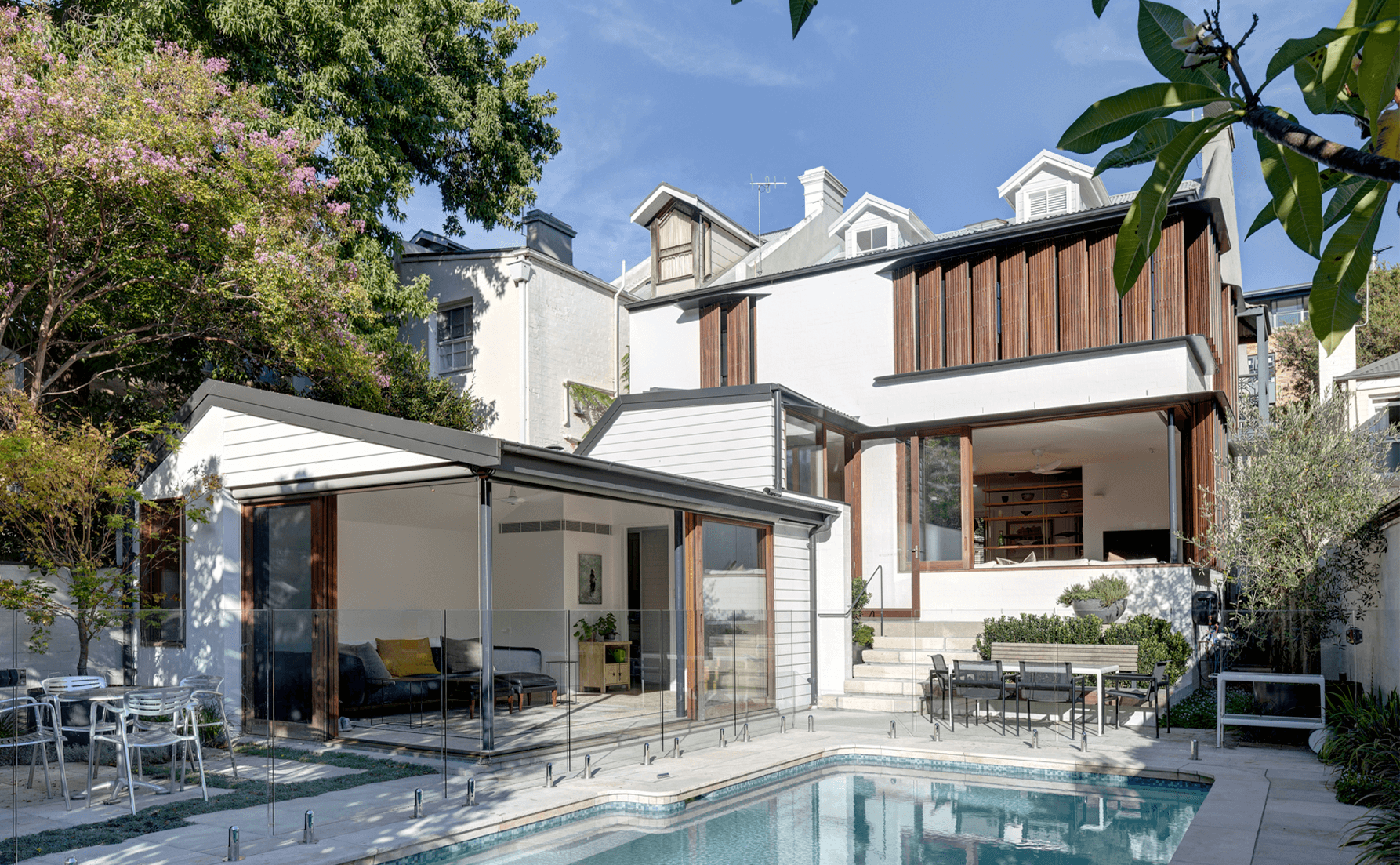
At Cascade Street, the challenge was to unify a Victorian terrace with a 1980s addition while improving light, space and connection to the surrounding environment.
The original staircase was steep and no longer compliant with current safety standards. Replacing it required careful negotiation with Woollahra Council, whose heritage controls stipulated that original elements be retained wherever possible.
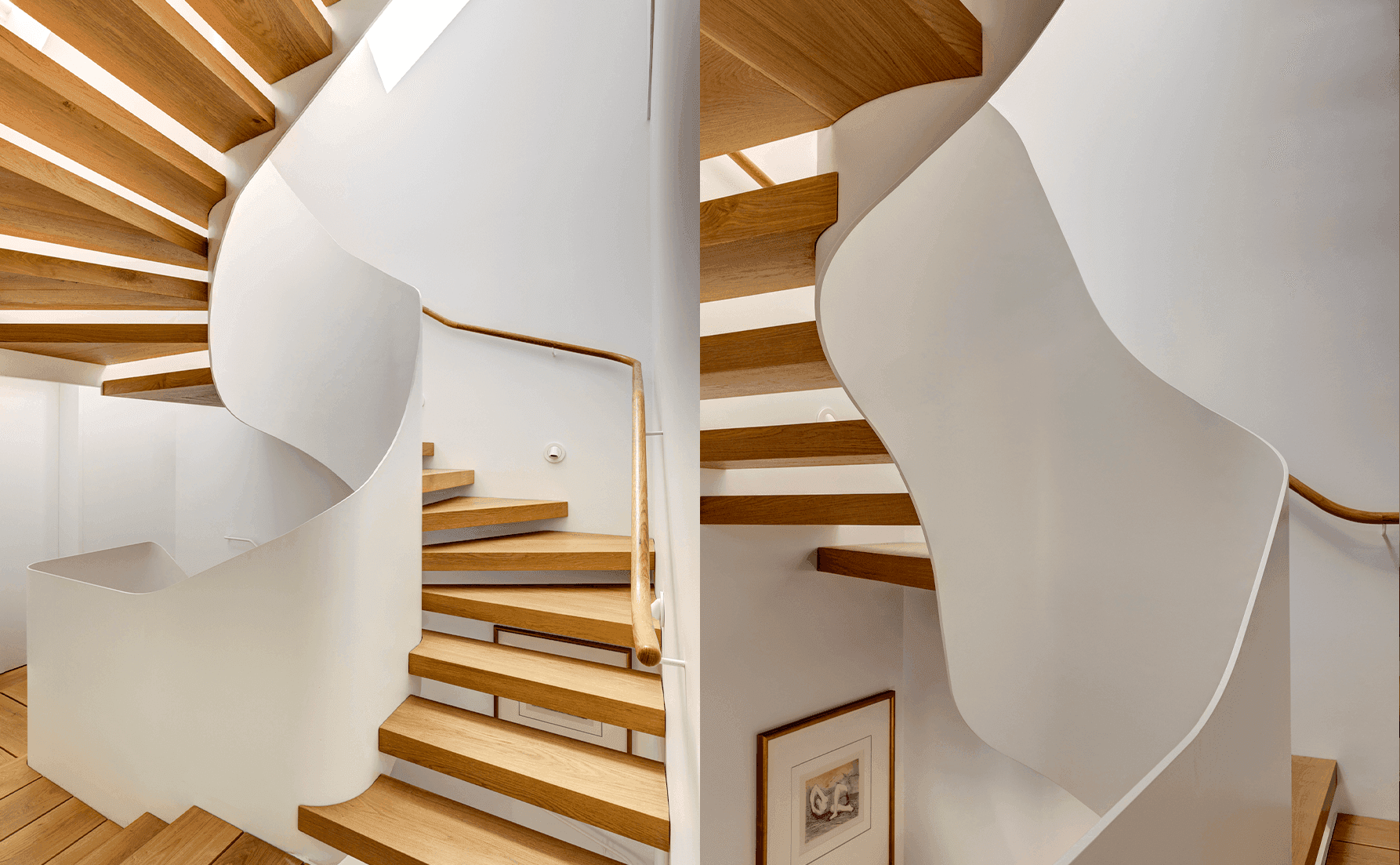
Through a considered design process and a nuanced understanding of planning controls, we were able to introduce a new sculptural white-painted steel and timber staircase that spirals through the three levels of the home. Beyond improving safety and circulation, the stair draws natural light deep into the interior.
The main living area was extended and the ceiling height increased, creating a more generous spatial experience. A corner-opening at the lower level strengthens the connection to the garden and pool, while an upper-level corner window, screened with pivoting timber shutters, frames views to the nearby oval while maintaining privacy and winter heat gain.
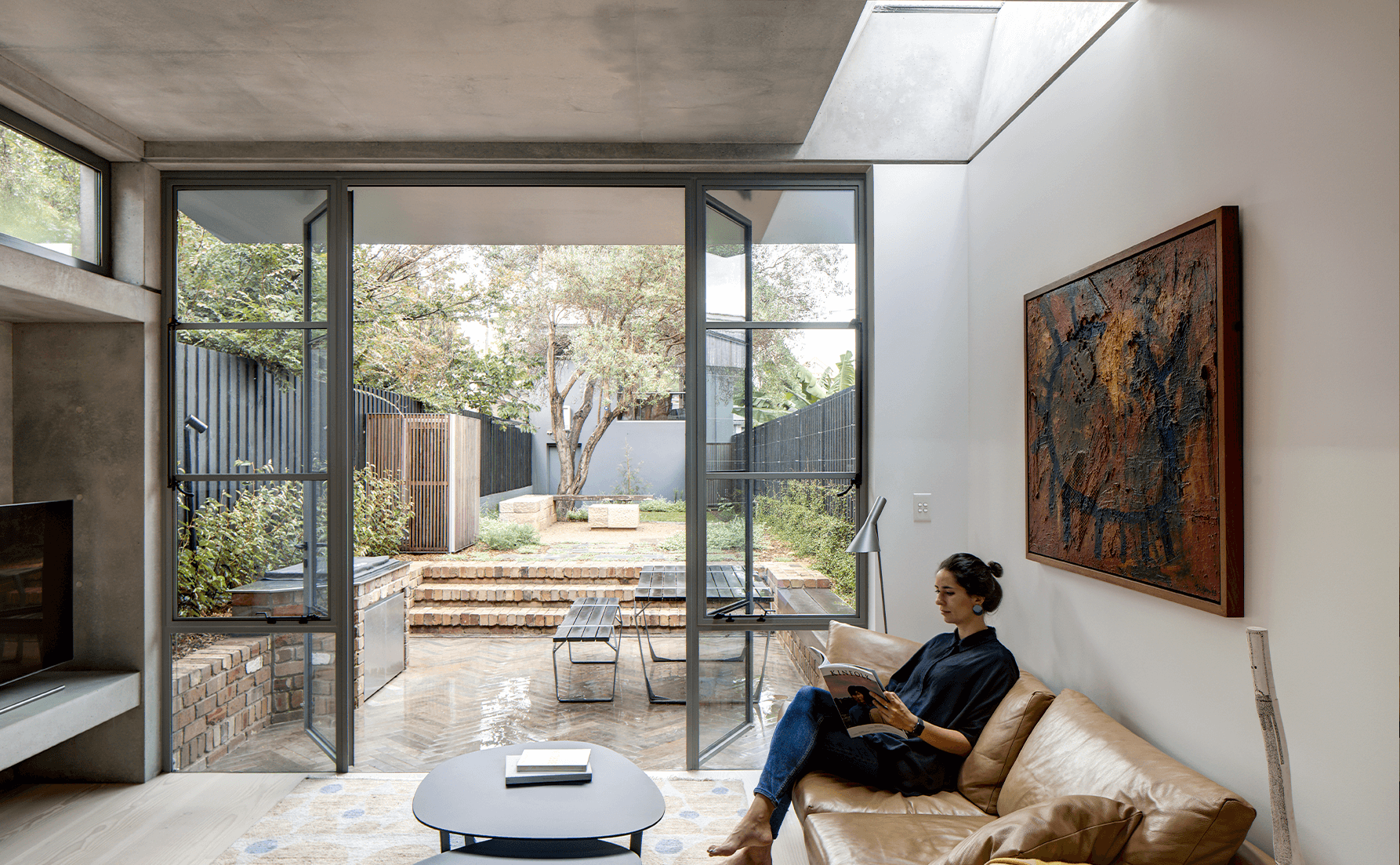
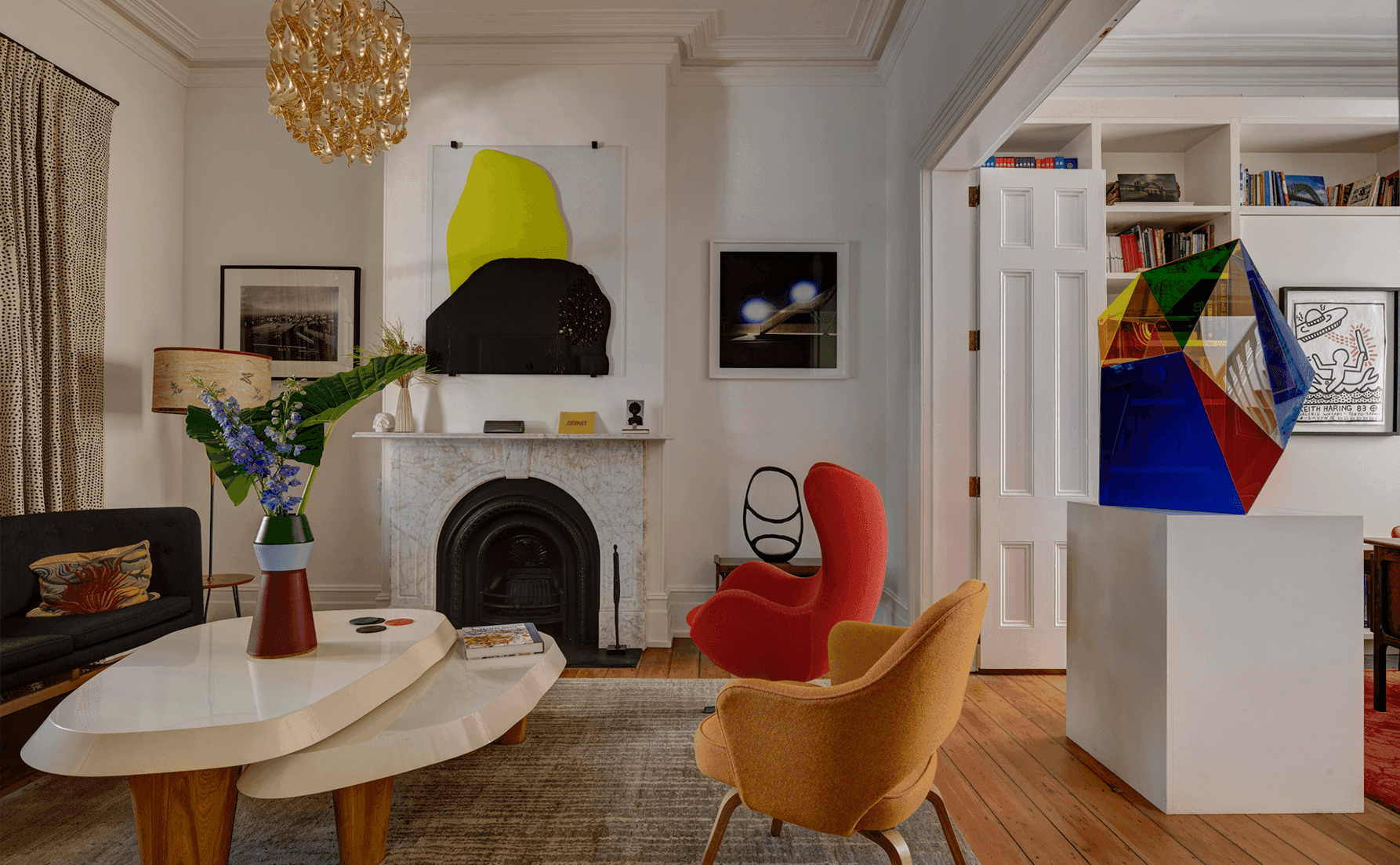
At Annandale, the brief was to create calm, light-filled spaces that allow the clients’ art collection to take centre stage, building upon an earlier renovation by Caroline Pidcock.
Working within Inner West Council’s heritage conservation controls, we refurbished the existing attic into a habitable bedroom. Council requirements dictated that any dormer be set back from the boundaries, which significantly reduced available headroom.
Resolving this constraint required careful stair geometry and spatial planning to ensure safe and comfortable access to the attic.
Elsewhere in the home, enlarged openings, new skylights and high-level windows introduce natural light into previously dark areas. A perforated metal stair allows daylight from an operable skylight to filter down through the house. The material palette remains restrained: off-form concrete, Douglas Fir floorboards, white walls and ceilings, allowing art and light to define the atmosphere.
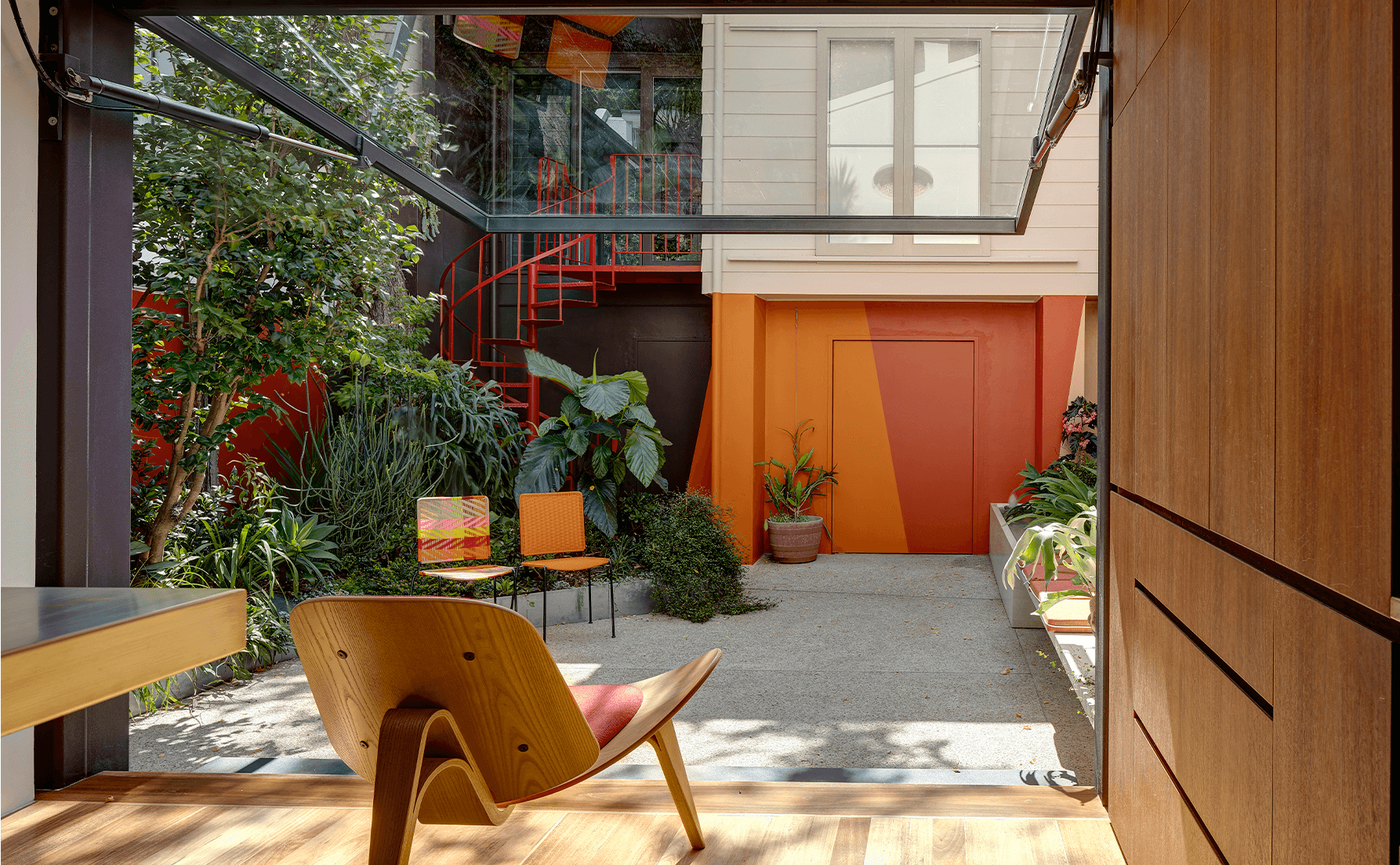
In Darlinghurst, we undertook a modest renovation within the existing footprint of a two-storey Victorian terrace.
The aim was not to expand dramatically, but to recalibrate the internal spaces to suit the lifestyle of an artist and musician while preserving the building’s historic character.
Four vaulted skylights were introduced upstairs to bring light into the darkest areas. At ground level, sliding timber doors and a large tilt-up rear door strengthen the connection between kitchen, dining and courtyard.
Original fireplaces, cornices and timber floorboards were carefully restored. A custom “cabinet of curiosities” was integrated into the design, providing display space for art, books and records while maintaining order within the compact footprint.
The courtyard garden reinterprets the Victorian fernery in a contemporary way, introducing layered planting, steel detailing and bold colour to create a sensory retreat within the urban block.
Heritage renovation is rarely straightforward.
At Cascade Street, replacing the original staircase required detailed consultation and a clear demonstration of improved safety and functionality.
At Annandale, attic conversion constraints required inventive spatial planning to achieve compliant access within tight dimensional limits.
In older terraces, unforeseen conditions such as structural issues, outdated services and concealed deterioration often emerge once demolition begins. Early investigative work and realistic budgeting are essential to reduce stress during construction.
Experience matters. Understanding how councils assess applications, how to document changes clearly, and how to articulate the heritage rationale behind design decisions can significantly influence outcomes.
A successful terrace renovation does not attempt to erase history. Nor does it treat the building as untouchable.
The most rewarding outcomes arise when contemporary interventions sit comfortably alongside restored heritage fabric, each legible, each respectful of the other.
Natural light, improved circulation and spatial clarity are recurring priorities. Whether through reconfigured staircases, skylights, carefully positioned openings or refined material palettes, the goal is to transform dark and compartmentalised interiors into functional, adaptable homes suited to contemporary family life.
Terrace renovations within heritage conservation areas demand patience, negotiation and design rigour. With the right approach, however, they offer an opportunity to create homes that honour their past while confidently accommodating the present.
If you are considering a terrace renovation within a heritage conservation area, we would welcome the opportunity to discuss your project and guide you through the design and approval process.
Ben Chan
Associate Director

11 Sep 26
You’ve engaged an architect. Now you’re weighing up whether you also need an interior designer, and whether skipping…

29 Jul 26
Planning a renovation or new build in Sydney? An architect’s greatest value is often in the costly problems they prevent before construction even begins. Learn what a residential architect genuinely brings to your project across site feasibility, council approvals, precise documentation, and builder management.